About 140 minutes
The Origin and Ideals of the Modern School — Edition Insights
Teaching Methods
32,152 recorded words. 3 minutes difference from this book's estimate.
View Gutenberg source #66644
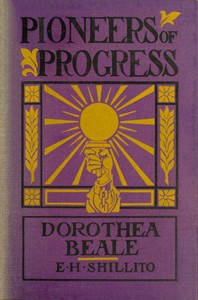
Before opening Dorothea Beale: Principal of the Cheltenham Ladies' College, 1858-1906 — Story, Setting & Ideas, the edition data offers a quick orientation: 32,780 words, 2 hr 23 min estimated reading time, and 20 detected text sections.
The text analysis averages about 21.8 words per sentence, while the detected sections provide another way to judge how the source is divided.
Project Gutenberg metadata also associates the work with “Beale, Dorothea, 1831-1906,” connecting these edition facts with the source record’s subject description.
Explore this collection
These alternatives are selected using recorded categories and estimated reading time.
About 140 minutes
Teaching Methods
32,152 recorded words. 3 minutes difference from this book's estimate.
View Gutenberg source #66644About 122 minutes
Teaching Methods
28,038 recorded words. 21 minutes difference from this book's estimate.
View Gutenberg source #29635About 165 minutes
Teaching Methods
37,941 recorded words. 22 minutes difference from this book's estimate.
View Gutenberg source #54114Search stored excerpts and compare books → Choose by your preferences →
Choices use stored catalog measurements. Estimates vary with reading speed. A shared category is a catalog label, not a claim that two books have the same argument or literary quality.
Search reads excerpt text stored with this catalog and links to its associated Gutenberg record. The connection is stored in the site database; this tool does not recheck that every excerpt is word-for-word identical to that external record. Excerpt search does not cover every chapter and does not verify historical publication dates.
Catalog snapshot checked: 2026-09-25. Coverage: 96 public books, 96 available source excerpts.
Calculated from edition completeness, EPUB availability, text structure and catalogue metadata. Not a user rating.
Total of 100 points, scaled to a 2.5-5.0 range. Editions with an empty description or a missing EPUB file are not scored.
Public-domain source text
The source text is kept in the dedicated reader, separate from this catalogue record and its commentary.
Elizabeth H. Shillito's biography of Dorothea Beale opens not with a birth date but with an epigraph from Edward Thring about passing on a light from the dead who live—a clue to the book's governing metaphor of education as a sacred inheritance. The author, a former student and later colleague of Beale, writes from inside the institution she helped shape, yet the narrative is punctuated by Beale's own letters and diary extracts that resist hagiography. A teasing letter from Beale's father warns her against writing 'as if you were at the top of your speed,' and the biography itself is structured around such small, revealing collisions: between the principal's drive and her father's caution, between her dream of a teaching sisterhood and the social realities of Cheltenham society.
Shillito repeatedly compares Beale's dedication to that of a nun, but the comparison is complicated by Beale's own evolution. Early in her career she envisioned a formal Sisterhood of Teachers who would 'live frugal, self-denying lives in a Community under a Mother Superior' and hold no personal possessions. The biography records that later she 'became less anxious for such a Sisterhood, believing that the inward spirit of consecration could exist equally well without the outward and visible signs.' This shift is not presented as a failure but as a pragmatic adaptation to the realities of institutional leadership. The tension between the ascetic ideal and the demands of running a college surfaces in other details: Beale dressed plainly by choice but was 'forced upon' by others to dress more grandly. Shillito uses such episodes to show how Beale's spiritual ideals were continually tested against the social and practical pressures of her position.
Beale's father's letter—'pray do not be always in a hurry, you will inevitably break down'—is one of the few external voices in the biography that directly challenges the principal's relentless pace. Shillito does not resolve this tension; instead she lets it stand as a counterpoint to Beale's own view that 'life and work were one.' The biography notes that Beale had 'very little small talk' and was 'too quietly thoughtful to be a great success socially,' traits that her father worried would lead to physical collapse. Yet the same single-mindedness allowed her to lay 'the foundations of a new intellectual world for women.' Shillito's treatment of Beale's health and habits—her 'Spartan' way of living, her refusal to go out in the evenings—suggests a woman who managed her energy as carefully as she managed her curriculum, even if the cost to her body was a matter of concern to those who loved her.
A striking anecdote in the biography involves Miss Belcher, a teacher trained at Cheltenham, who with a colleague considered applying for a headship elsewhere. Beale told them, 'Events are imminent which will shake the College to its very foundations,' and they immediately withdrew their applications. Shillito presents this as evidence of Belcher's 'great loyalty,' but the story also reveals Beale's strategic use of institutional crisis to retain talent. The biography does not explain what those events were, leaving the reader to infer the delicate balance between personal ambition and institutional stability that Beale managed. This episode, like the father's letter, shows Shillito's method: she lets primary sources—letters, reported speech, diary entries—carry the weight of interpretation, offering the reader a portrait built from such moments of decision and restraint.
Readers approaching this biography should attend to its silences as much as its statements. Shillito rarely steps back to offer sweeping judgments; instead she assembles documents and lets Beale's own words—and those of her father, her colleagues, and her critics—create a mosaic. The book is most revealing when it shows Beale negotiating between the ideal of a consecrated life and the compromises of institutional leadership. For those interested in the history of women's education, this is not a triumphalist narrative but a study of how one woman managed the gap between her spiritual aspirations and the daily work of running a school.
In Shillito's Dorothea Beale, the Cheltenham principal often stole quiet hours to copy passages into her commonplace books, weighing each word like a pebble. That same patient, private discipline breathes through Practical Education, Volume I — Reading Notes—two volumes that seem to nod to one another across the shelf, both trusting that a small, well-chosen observation can outlast any grand declaration.
Answer a few questions and save a private reflection on this device.