
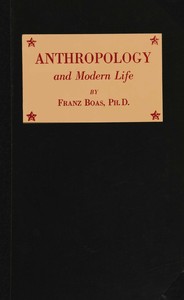
Anthropology and modern life by Franz Boas
Franz Boas's 'Anthropology and Modern Life' isn't a novel with a plot, but it has a powerful narrative drive. It's the story of an idea fighting for its life: the idea that all human groups have equal capacity. Published in 1928, the book confronts the rising tide of scientific racism and aggressive nationalism head-on. Boas walks us through the evidence, showing how concepts of race were used to justify inequality and how notions of fixed 'national genius' were political tools, not biological truths. He argues that what we call 'human nature' is almost entirely shaped by culture and history, not by our biology. The 'story' is his methodical, evidence-based takedown of these harmful myths, one chapter at a time.
Why You Should Read It
You should read this because it will change how you see the daily news. Boas's core argument—that our environment and learned traditions matter far more than any innate racial or national character—feels incredibly urgent today. When you hear debates about immigration, intelligence testing, or cultural conflict, Boas provided the foundational counter-argument nearly 100 years ago. His writing is clear and firm, driven by a deep moral conviction that science should liberate, not oppress. It's humbling and empowering to realize how many of our current discussions were anticipated by this one scholar. He gives you the intellectual backbone to question simplistic explanations for human behavior.
Final Verdict
This book is perfect for curious readers who want to understand the roots of modern social science and our ongoing debates about identity. It's for anyone who feels skeptical about claims of biological destiny or cultural superiority. It's not a light read, but it's a profoundly important one. You'll come away with a sharper mind and a clearer understanding of why the fight against prejudice requires good science and historical perspective. If you want to know where the ideas of 'culture over biology' really began, start here.




Jackson Scott
3 weeks agoBeautifully written.